service
B2B portal development
We build B2B portals that move quoting, ordering and account workflows out of email and spreadsheets into one integrated, auditable interface.
what it is
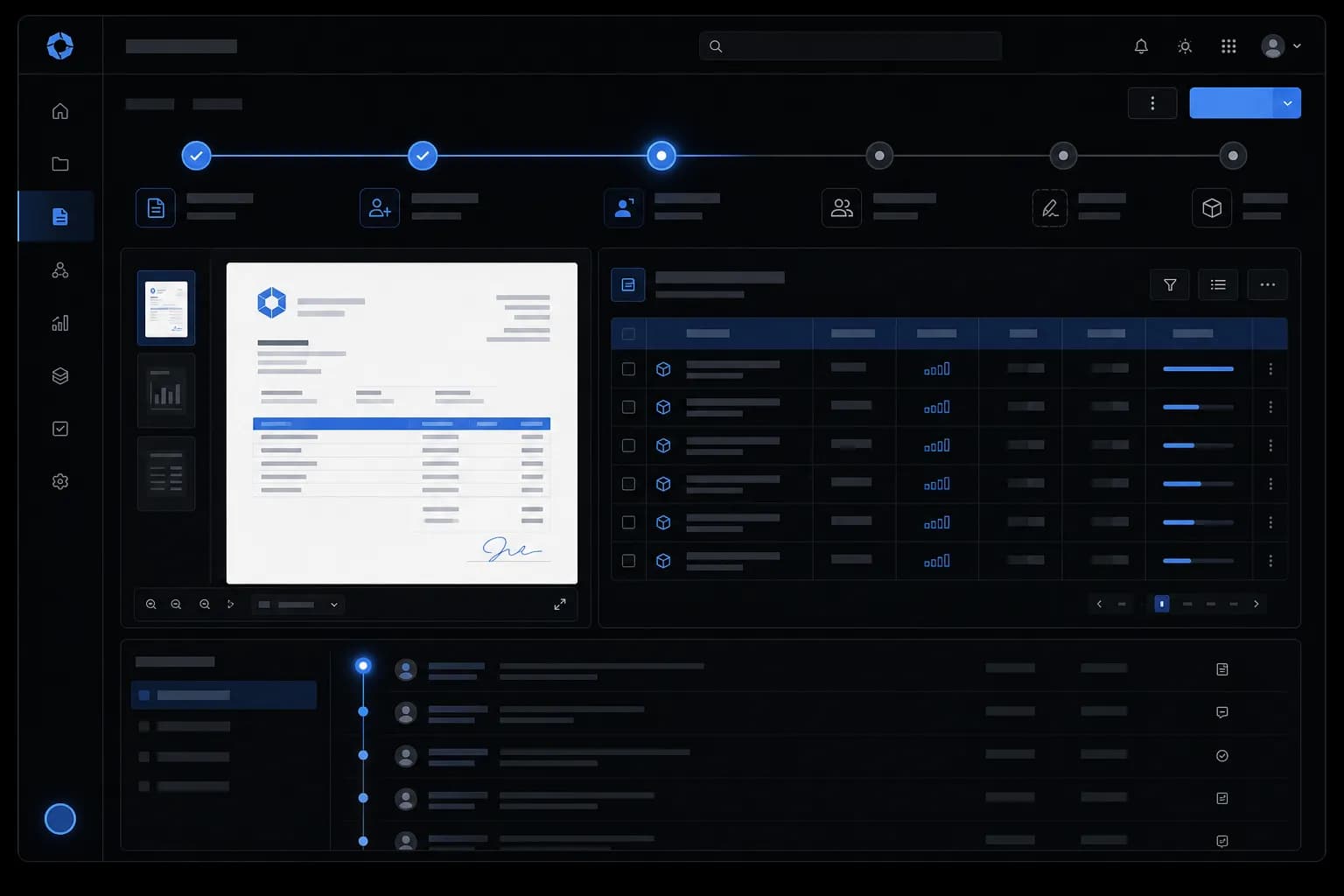
A B2B portal is a secure web application carrying the transactional relationship between businesses: quotes, orders, contracts, account hierarchies, approvals and documents — connected to the systems of record on both sides of the workflow.
who it’s for
Companies whose B2B transactions involve negotiated pricing, multi-step approvals, account hierarchies or recurring structured orders.
how it works
Map the transaction
Quote-to-order flow, approval chains and account structures documented end to end.
Design the workflows
Interfaces per role — buyer, approver, account admin, your internal team.
Build & integrate
ERP integration, audit trails, staged rollout account by account.
key takeaways
- —Quote-to-order workflows without re-keying
- —Contract pricing and account hierarchies modeled natively
- —Approval chains and full audit trails
- —Integrated with the ERP your business runs on
The workflow is the product
B2B commerce rarely fails on the catalog — it fails on the workflow. Negotiated pricing living in spreadsheets, approvals living in inboxes, orders re-keyed into the ERP by hand, and nobody able to say where a given quote stands. A custom B2B portal makes the workflow itself digital: quote-to-order in one thread, contract pricing applied automatically, approvals routed to the right person, every action logged.
Built around your account structure
Real B2B account structures are hierarchical: parent companies with branches, buyers with spending limits, approvers above them, finance watching all of it. Storefront templates flatten this into a single login and force the hierarchy back into email. The portal models your structure natively, so permissions, pricing and approval chains follow the org chart instead of fighting it — a branch buyer places the order, the regional approver clears it, the parent account sees the consolidated view.
Contract pricing without the spreadsheet
Negotiated terms are where B2B margins live and where manual processes leak. The portal applies each account's contract pricing automatically — volume breaks, negotiated rates, regional terms — so every quote is correct by construction. Finance stops auditing quotes after the fact; sales stops looking up prices before every conversation. Where orders start from a configurable product, custom configurator development feeds the same quote-to-order thread with valid, priced configurations.
An audit trail your operations can trust
Every quote, revision, approval and order carries its history. When a dispute surfaces months later, the answer is in the portal, not in someone's inbox archive. Integration with your ERP keeps the portal and your system of record in step — orders flow in without re-keying, statuses flow back without asking.
Priced for the work
Engagements typically run $60,000–$250,000 by workflow and integration depth. The mapping session documents your quote-to-order flow end to end and produces a fixed-price specification. The core workflow ships first as working software; account hierarchies, analytics and secondary workflows extend from there. You own the code and the roadmap.
questions
What is a B2B portal, practically?+
It is the secure web application carrying your business-to-business transactions: quotes, orders, contract pricing, approvals and documents. Instead of workflows scattered across inboxes and spreadsheets, both sides work in one auditable interface connected to your ERP — orders stop being re-keyed and pricing stops living in tribal knowledge.
How is this different from an e-commerce store?+
B2B commerce runs on negotiated pricing, account hierarchies and approval chains — things a storefront template does not model. A B2B portal is built around your account structure and workflow: buyers with limits, approvers above them, contract terms applied automatically, and an audit trail behind every action.
Does the portal integrate with our ERP?+
Yes — integration is usually the point. Orders, pricing, account data and documents flow between the portal and your ERP through a controlled integration layer, so your operations team keeps working in the system they know while customers get a modern interface.
related services